UX Solutions for Robin
UX Solutions for Robin was a team project for the Introduction to User Experience Design course, created by Frankie Reyes, Jeremy Gauvin, Noor Al Malallah, Rutvi Gandhi, and Yuxin Song under the guidance of Tobias Komischke, Ronnie Battista, Lisa Woodley, and David Ogunrinde.
Role: UX Designer
Project Type: Academic / Concept UX Project
Timeline: Spring Semester (about 12 weeks)
Tools: Figma, Miro

Overview
Finding a job is one of the most stressful and uncertain situations, and Robin, an AI-powered job-seeking tool, was created to help users through it. By developing a clear, encouraging, and customized user experience that enables users to confidently utilize applications, this project aims to lessen emotional friction, such as bewilderment, anxiety, and a lack of feedback.
Design focus: clarity, emotional reassurance, and actionable guidance.
The Problem
The application procedure is frequently perceived by job searchers as being overwhelming, disjointed, and disheartening. Users must frequently update their resumes, navigate multiple platforms, and submit applications with minimal to no feedback. Users are left wondering whether they are applying correctly, whether they are improving over time, and whether they are even being considered at all due to this lack of transparency.
Early observations and research identified a number of major pain points:
Users are perplexed by inconsistent application processes and job platforms.
Candidates are not provided with individualized guidance on how to enhance their resumes and match them with suitable positions.
Applications, progress, and feedback cannot be tracked centrally. Silence following submissions increases emotional irritation and worry.
As a result, what should be a goal-oriented journey becomes a depressing experience as job seekers lose confidence, waste time, and feel disengaged from the process.
The Goal
The goal of this project was to design a clear, supportive, and intelligent job-seeking experience that empowers users instead of overwhelming them.
The design specifically sought to:
Make the job application process easier with clear procedures and intuitive navigation
Use AI-powered assistance to help people find relevant jobs, enhance resumes, and comprehend next steps.
Enable users to monitor applications, due dates, and advancement in a single location to centralize the experience.
Make the process feel directed, open, and human-centered to lessen emotional tension.
Ultimately, the goal was to help users feel more confident, informed, and in control throughout their job search, transforming uncertainty into actionable progress.
User Research
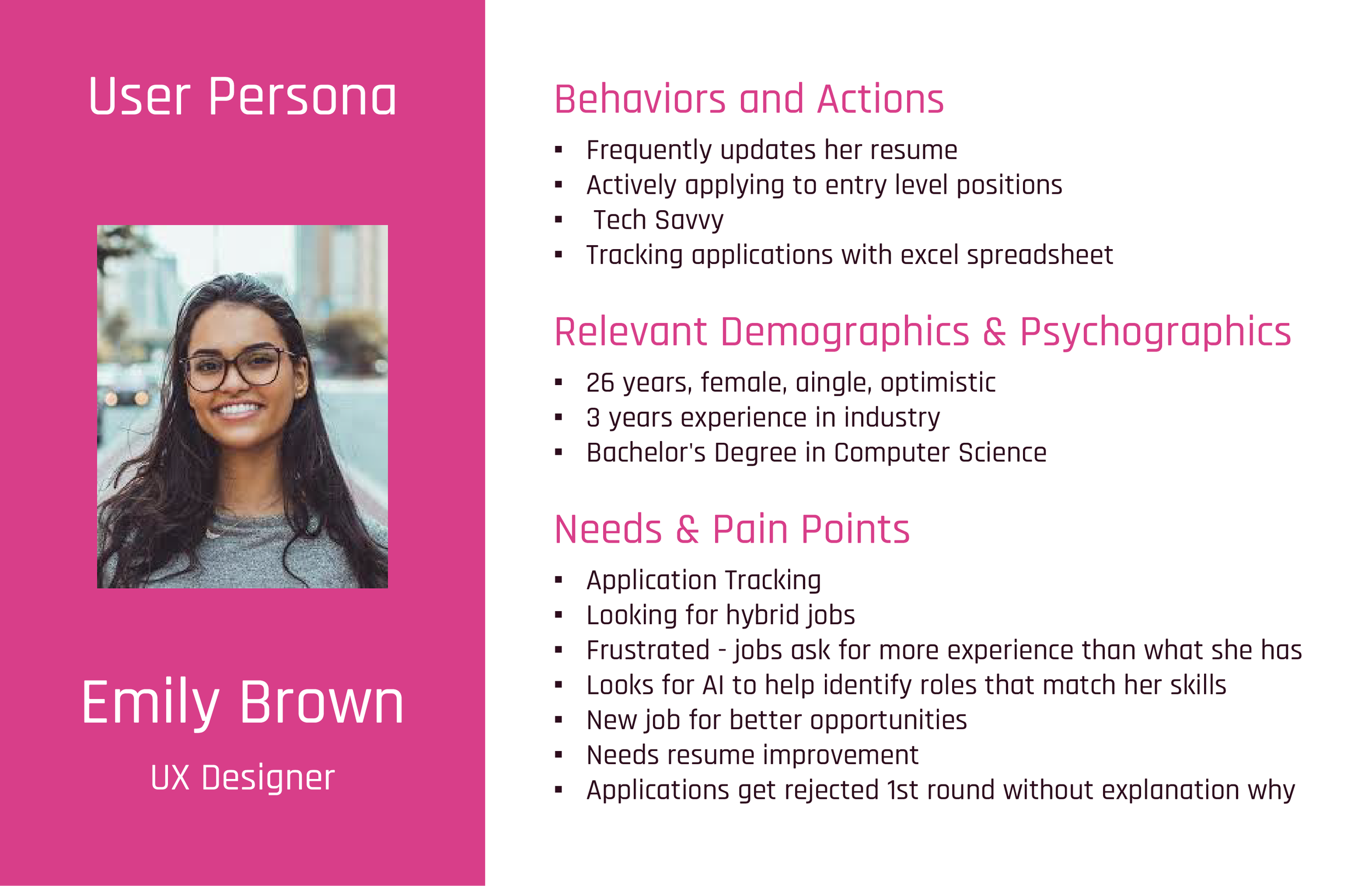
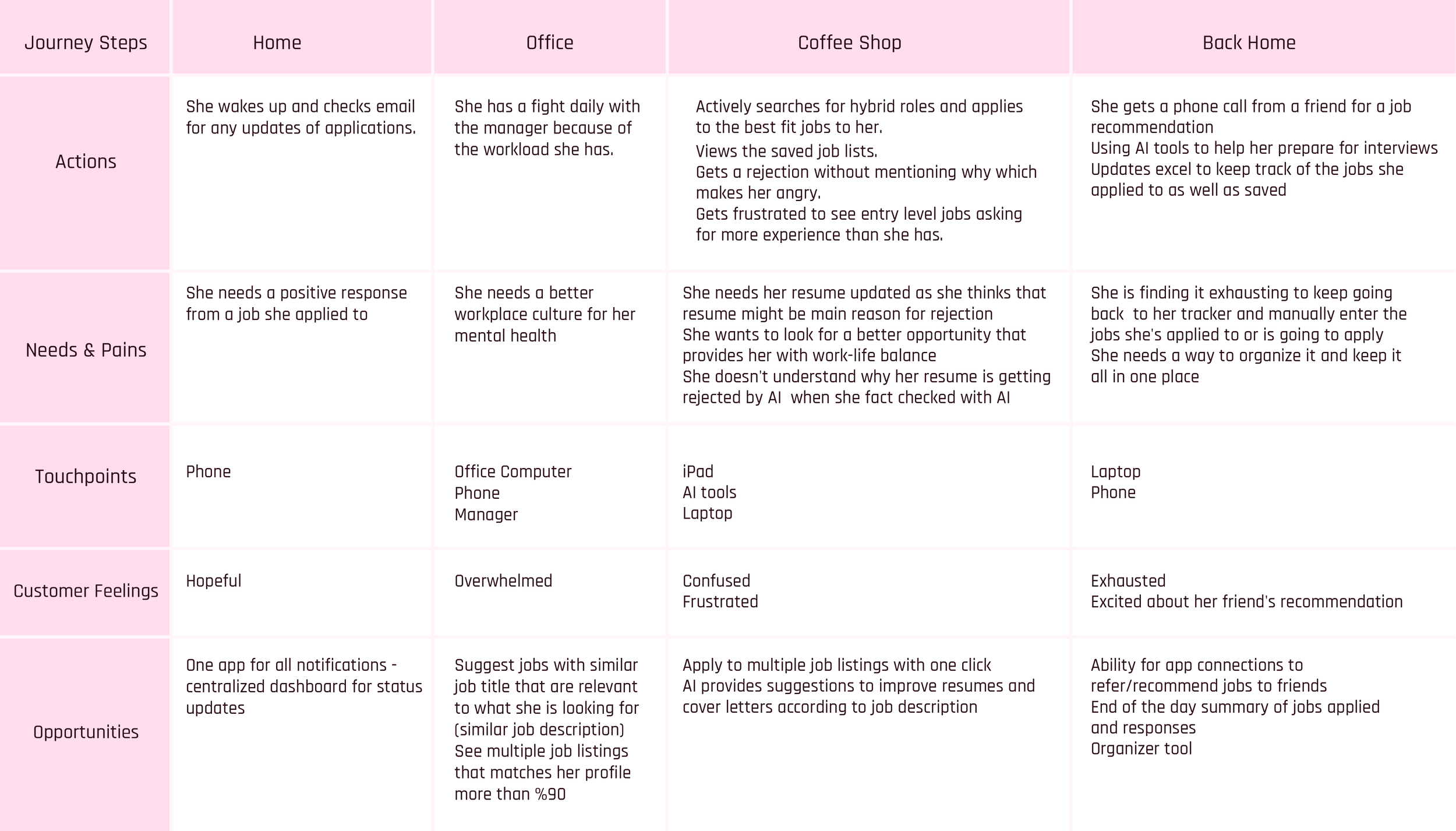
We conducted user research with 22 participants through a combination of surveys and Zoom interviews. Our findings revealed that job seekers often feel overwhelmed by the complexity of the application process and the lack of feedback after submitting resumes. Many participants expressed the need for guidance when filling out applications and desired AI support for tasks such as resume enhancement, job matching, and application tracking. These insights helped us define the core pain points: difficulty managing applications, frustration with repeated rejections, and the need for a centralized tool to organize the job search process.
Journey Map
Design
Iterative concept sketching through multiple 5-minute design studio sessions

Final group sketch

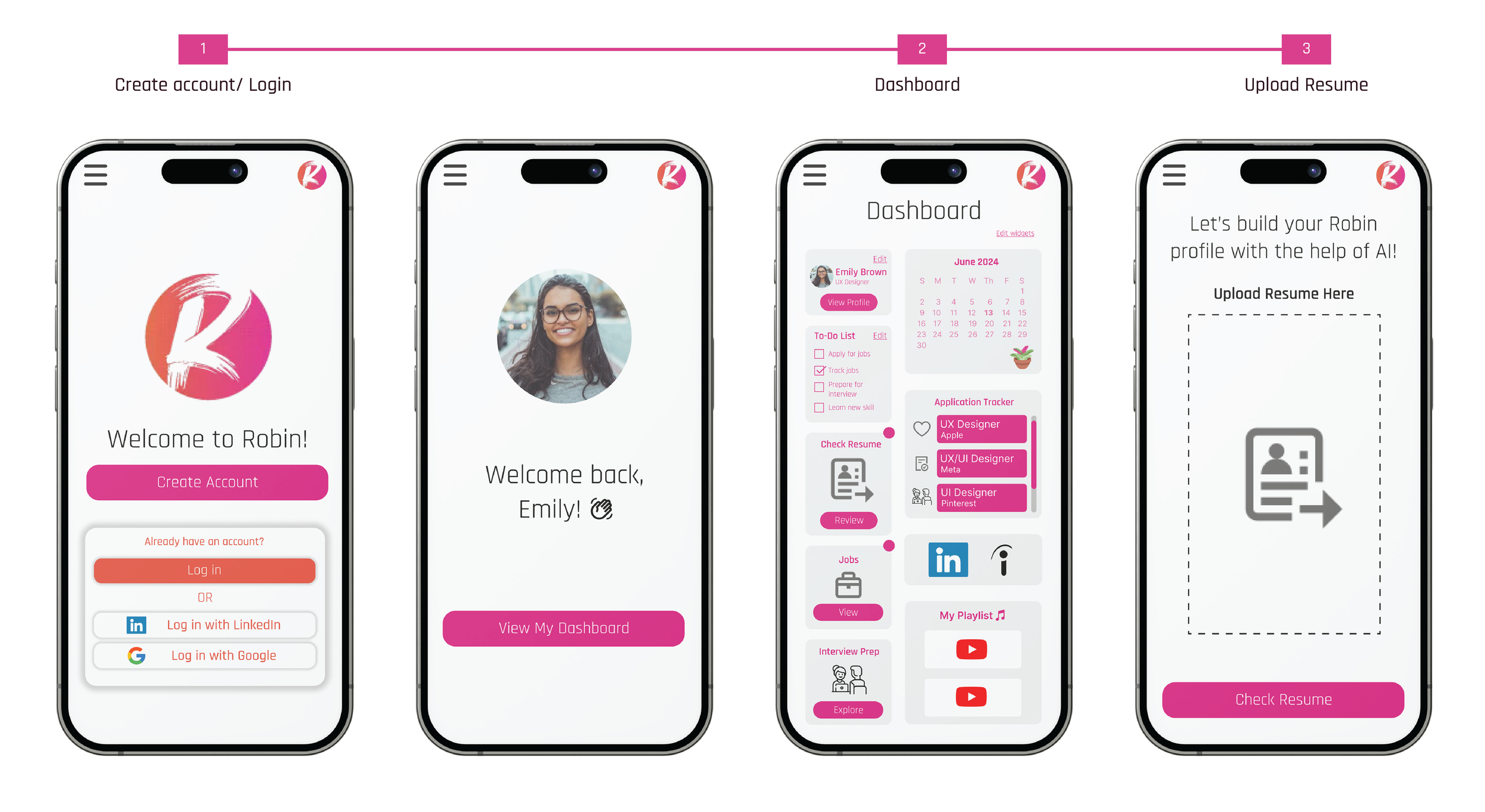
DESIGN: PROTOTYPE FEATURES


Usability Testing & Validation
Testing Goals
The goal of usability testing was to evaluate the clarity, usability, and overall effectiveness of the Robin platform while identifying blind spots and opportunities for improvement. Testing focused on validating whether users could complete core tasks and understand key features without guidance.
Specifically, testing aimed to:
Conduct usability testing with at least five participants
Gain actionable insights through hands-on interaction
Identify usability gaps and opportunities for enhancement
Methodology
A total of five usability tests were conducted, including four in-person sessions and one remote (Zoom) session. Participants were asked to complete a series of guided tasks while thinking aloud, followed by targeted questions to assess comprehension and expectations.
Key Questions
Participants were asked questions such as:
“Can you walk me through the elements you see on the Dashboard?”
“What do you think the Resume Results page is communicating? What do these percentages mean to you?”
“Did the Apply page look the way you expected it to?”
These questions helped uncover how users interpreted information, navigated the interface, and formed expectations.
Tasks Evaluated
Participants were asked to:
Create a new account using resume upload and AI-generated suggestions
Like and apply for a job
Navigate and interpret the Dashboard
Key Findings
What Worked Well
Users consistently described the platform as:
Easy to understand
Familiar with layout and interaction patterns
Unique in its feature set compared to traditional job platforms
Participants quickly grasped the core concept of browsing and applying for jobs, and several compared the experience to familiar swipe-based interfaces.
Opportunities for Improvement
Usability testing revealed several opportunities to enhance the experience:
Introduce swipe gestures between job cards to improve interaction flow
Add a friend-recommended job feature to increase trust and discovery
Implement filters for job searches and AI resume suggestions
Integrate more functionality directly within the Dashboard to reduce navigation friction
User Feedback
Direct participant feedback highlighted the value of these features:
“I see this like a dating app, where you can love a job or say no to a job you’re not interested in.”
“Compared to other job platforms, you don’t see this friend-recommended feature.”
Next Steps
Based on testing outcomes, the next steps include:
Gaining prototype approval from Robin to move forward
Implementing revisions based on usability insights
Conducting additional rounds of usability testing after updates